Keeping 18K White Gold Luminous: Rhodium Plating Lifespan & Home Cleaning Rituals
How to remove lotion film that dulls diamond fire in minutes, plus when to refresh rhodium plating on white gold jewelry.
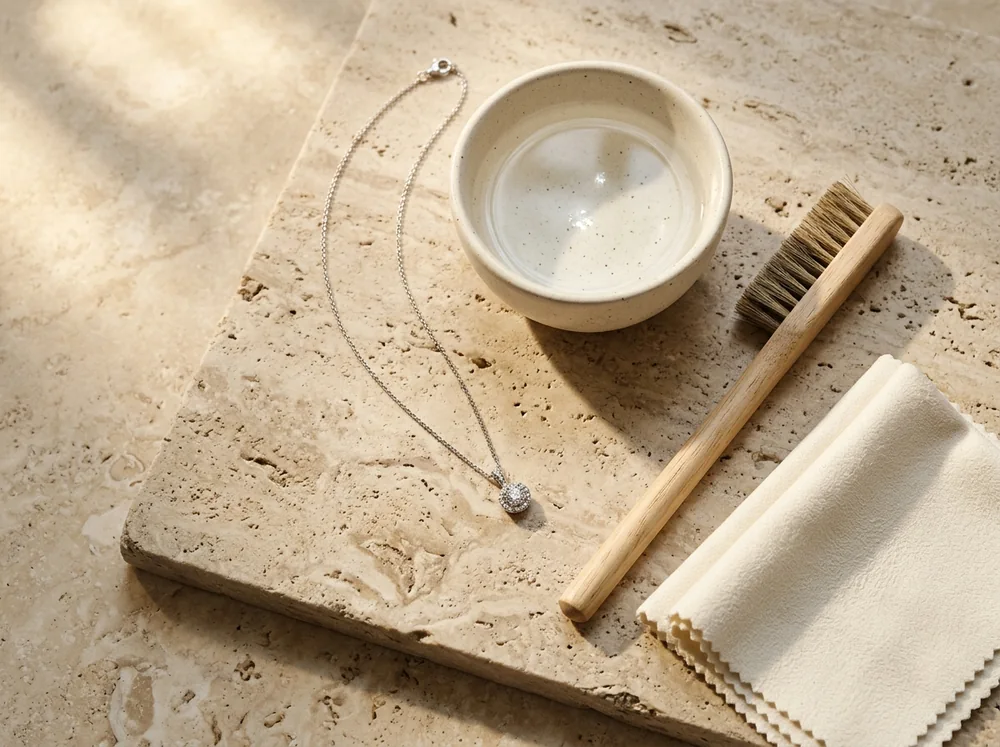
Diamonds possess a curious chemical trait known to gemologists as oleophilicity—an affinity for oils. Touch a freshly cleaned diamond once with your fingertip and a microscopic film of skin sebum clings immediately to the pavilion facets, blocking internal light reflection and making even an ideal-cut stone look cloudy. Proper home care restores showroom fire without risking delicate 18K white gold settings.
Understanding Rhodium Over 18K White Gold
Pure gold is naturally rich yellow. To create 18K white gold, metallurgists alloy 75% pure gold with 25% bleaching precious metals such as palladium or silver, then electroplate the finished piece with a micron-thin layer of rhodium—a rare platinum-group noble metal with mirror-white reflectivity.
Unlike rings that rub constantly against door handles and steering wheels, 18K white gold necklaces and diamond earrings experience minimal mechanical abrasion. Their rhodium finish typically stays bright for three to five years before ever needing a quick jeweler's dip.
The Five-Minute Bench Jeweler Cleaning Method
- Prepare a warm bath: Fill a small ceramic bowl (never clean over an open sink drain) with lukewarm—not boiling—distilled water and two drops of mild, fragrance-free dishwashing liquid.
- Soak for ten minutes: Submerge your earrings or necklace so surfactants loosen sunscreen, hairspray, and skin oils trapped behind open gallery windows.
- Brush gently from behind: Use a baby-soft toothbrush or watercolor brush to sweep the underside of diamond baskets—especially on micro-pavé double hoops and sculpted wing studs.
- Rinse & pat dry: Rinse in clean warm water and blot dry on a lint-free microfiber cloth. Avoid paper towels, whose wood fibers can leave micro-swirls on high-polish gold.
Substances to Keep Away From White Gold
Chlorine bleach and hot-tub bromine are the sworn enemies of gold alloys; repeated exposure causes stress-corrosion cracking in solder joints and prongs. Always follow consumer care standards outlined by the Federal Trade Commission Jewelry Guides and remove fine jewelry before swimming in chlorinated pools or applying heavy chemical exfoliants.